
Author: Dinda Shabrina
In addition to digital interactive boards, the Ministry of Primary and Secondary Education distributed laptops and external hard drives to hundreds of thousands of educational institutions.
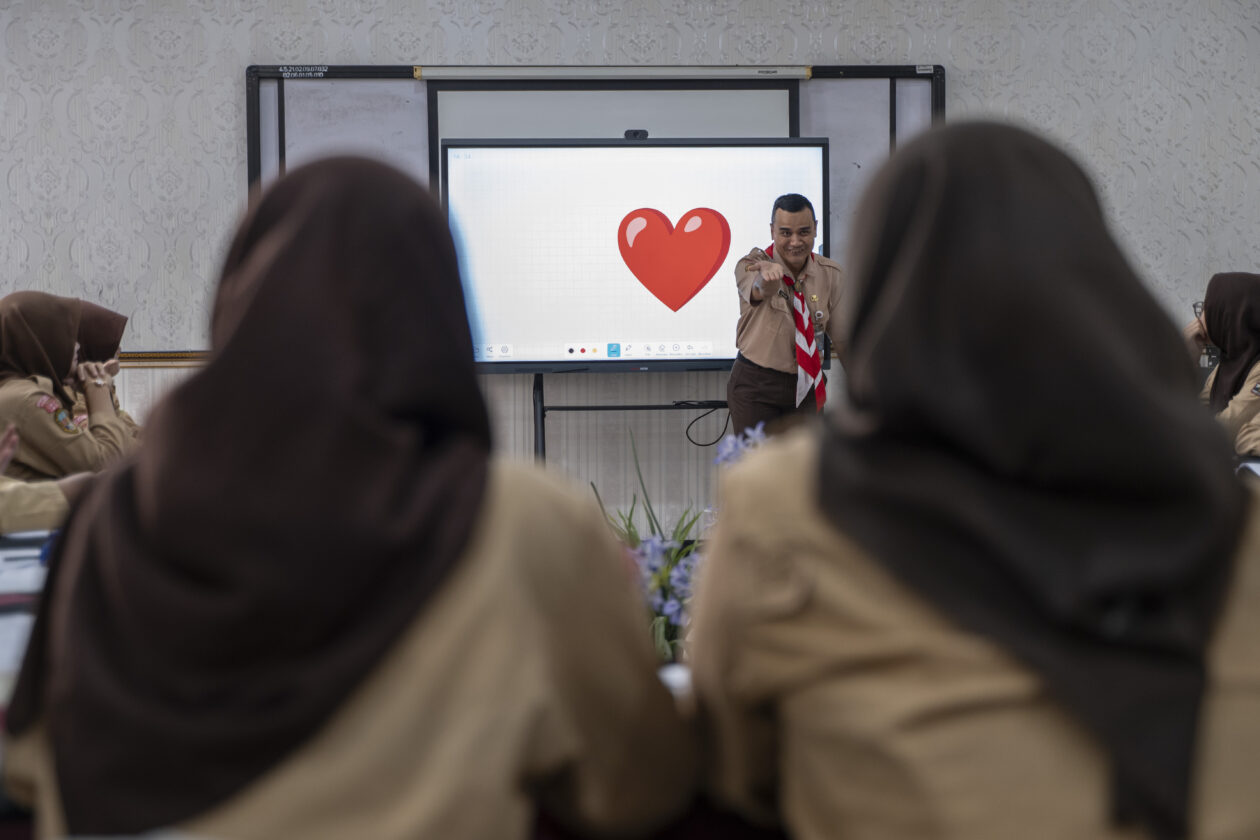
The Ministry of Primary and Secondary Education (Kemendikdasmen) has distributed 288,865 digital interactive boards, also known as Interactive Flat Panels (IFP), to educational institutions across Indonesia throughout 2025.
Minister of Primary and Secondary Education Abdul Mu’ti stated that the distribution of digital devices is aimed at expanding access and improving the quality of learning in schools.
“The implementation of programs and activities at Kemendikdasmen in the 2025 fiscal year has produced achievements at the national level,” Mu’ti said during a working meeting with Commission X of the Indonesian House of Representatives (DPR RI) in Jakarta on Wednesday, January 21, 2026.
In addition to digital interactive boards, Kemendikdasmen also distributed laptops and external hard drives to hundreds of thousands of educational units. This technological support was complemented by the provision of internet access to 8,152 schools and electricity services for 2,389 educational institutions, particularly in areas previously lacking basic infrastructure.
The digitalization of learning is part of Kemendikdasmen’s Quick Best Outcome Program (PHTC). This program runs alongside the construction and revitalization of educational institutions, with coverage expanded from the initial target of 10,440 schools to 16,167 schools.
The government stated that the program has also had an impact on the local economy, with construction funds absorbed across 5,273 sub-districts, involving more than 28,000 MSMEs, and employing approximately 192,665 workers.
Mu’ti noted that the use of digital devices in schools is expected to improve the quality of the learning environment, including in early childhood education (PAUD), and to strengthen the readiness of vocational graduates to enter the workforce. However, he did not elaborate on the effectiveness of the use of interactive boards in classrooms or the readiness of teachers to operate them.
Beyond the digitalization program, Kemendikdasmen also reported that the Indonesia Smart Program (PIP) has reached approximately 19 million students from poor and vulnerable families. Meanwhile, the Seven Habits of Great Indonesian Children Movement has been implemented in 170,870 educational institutions.