
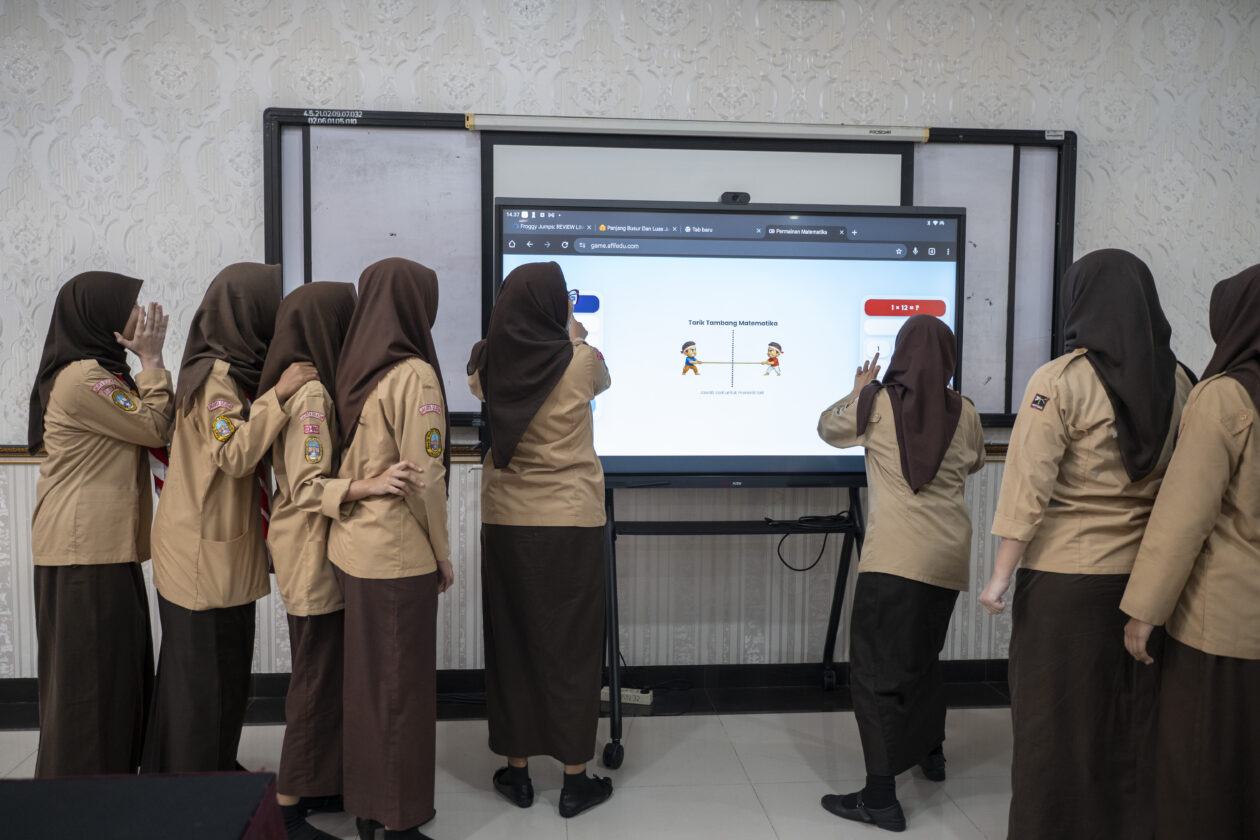
Jakarta – Amid efforts to equalize the quality of education, the use of digital technology by schools is becoming increasingly important. Through adaptive and inclusive learning innovations, digital model schools play a role in opening more equitable access to education that is relevant to the demands of the times.
In 2025, President Prabowo Subianto launched the Digitalization of Learning for a Smart Indonesia program. This program aims to accelerate the digital transformation of national education and to provide interactive, enjoyable, and equitable learning services throughout Indonesia.
This digitalization program includes the provision of digital interactive boards, laptops, learning materials, and training for teachers. The Ministry of Primary and Secondary Education (Kemendikdasmen) also launched Rumah Pendidikan (Education House) to integrate various digital education services into a single platform.
Rumah Pendidikan consists of eight integrated spaces featuring interactive learning videos, articles, virtual laboratories, educational games, and practice questions. This program makes it easier for teachers and students to access a wide range of digital learning resources.
However, this education digitalization program cannot be separated from digital connectivity. Stable and equitable internet access remains a challenge in several regions, especially in underdeveloped, frontier, and outermost areas (3T).
Limited network coverage in 3T regions often hampers the optimal implementation of education digitalization.
Efforts to provide equitable digital connectivity cannot be borne by a single party alone. The government, through the Telecommunications and Information Accessibility Agency of the Indonesian Ministry of Communication and Digital (BAKTI Komdigi), continues to promote the development of digital infrastructure, particularly through the Universal Service Obligation (USO) program in 3T regions.
On the other hand, the private sector contributes through technological innovation and investment. Equally important, the active role of the community is also key to ensuring that digital connectivity has a broad and sustainable impact.
To encourage public participation in strengthening national digital connectivity, detikcom is organizing the Digital Connectivity Appreciation program. This awards event is intended for individuals, communities, and institutions considered to have made tangible contributions to expanding access to technology and information in Indonesia, especially in 3T regions.
Along with strong public enthusiasm, the nomination submission period has been extended until 28 February 2026. This extension provides broader opportunities for the public to nominate inspiring individuals or parties who have worked to deliver the benefits of digital connectivity to their surrounding communities.
Through Digital Connectivity Appreciation, detikcom will highlight various stories of dedication and innovation emerging from the grassroots, ranging from community activists and volunteers to institutions that consistently open access to technology in remote areas of the country.