
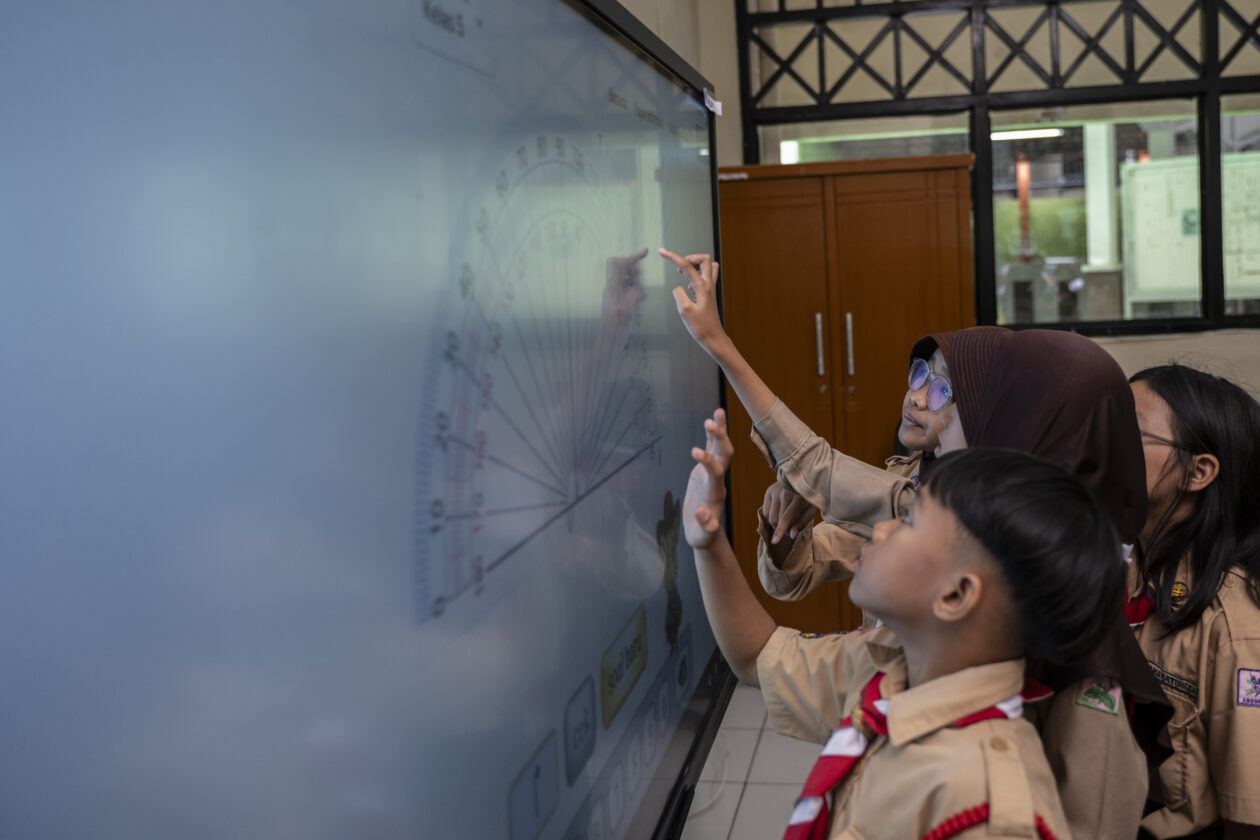
During his visit to SMPN 5 Bandung and SDN 001 Merdeka Bandung on Monday, Atip opened the class with a trigger question about Sumatra Island. Students’ spontaneous answers, such as floods, food, and Padang, were developed into a comprehensive discussion through illustrations, videos, and reinforcement of the material.
At SMPN 5 Bandung, students presented a group e-book project titled “Sumatra: Hidden Wonders of Indonesia,” covering history, literature, traditional musical instruments, traditional clothing, spices, animals, food, traditions, and culture. The project fostered collaboration, problem-solving, and creativity. In Indonesian language class, the teacher utilized PID to create joyful learning through Kahoot quizzes, procedural text videos, and discussions on linguistic elements, making the classroom atmosphere dynamic and actively engaging students.
Deputy Minister of Primary and Secondary Education, Atip, emphasized the importance of real implementation. “Teacher training is not enough if it is not optimally implemented. We want teachers not only to understand the concepts but also to apply them in daily practice,” he said. The visit is part of Kemendikdasmen’s commitment to monitoring and evaluating the implementation of Deep Learning in the field.
The principal of SDN 001 Merdeka, Sri Winggowati, appreciated the visit as a form of direct government attention to practices at the school level. “He wanted to see the challenges and their impact on students,” she stated. Similarly, the principal of SMPN 5 Bandung, Asep Hidayat, described the visit as a moment for reflection, evaluation, motivation, and constructive dialogue. “The presence of ministry leadership makes teachers and education staff feel valued for their hard work,” he added.
Through physical revitalization and complementary digitalization of learning, Kemendikdasmen seeks to bridge the educational gap between western and eastern regions of Indonesia. The program not only improves infrastructure and technology but also enlivens the learning atmosphere, encourages interaction, and ensures that young generations receive meaningful, competent, and competitive education as the main foundation for national educational equity.