
Source: AntaraNews
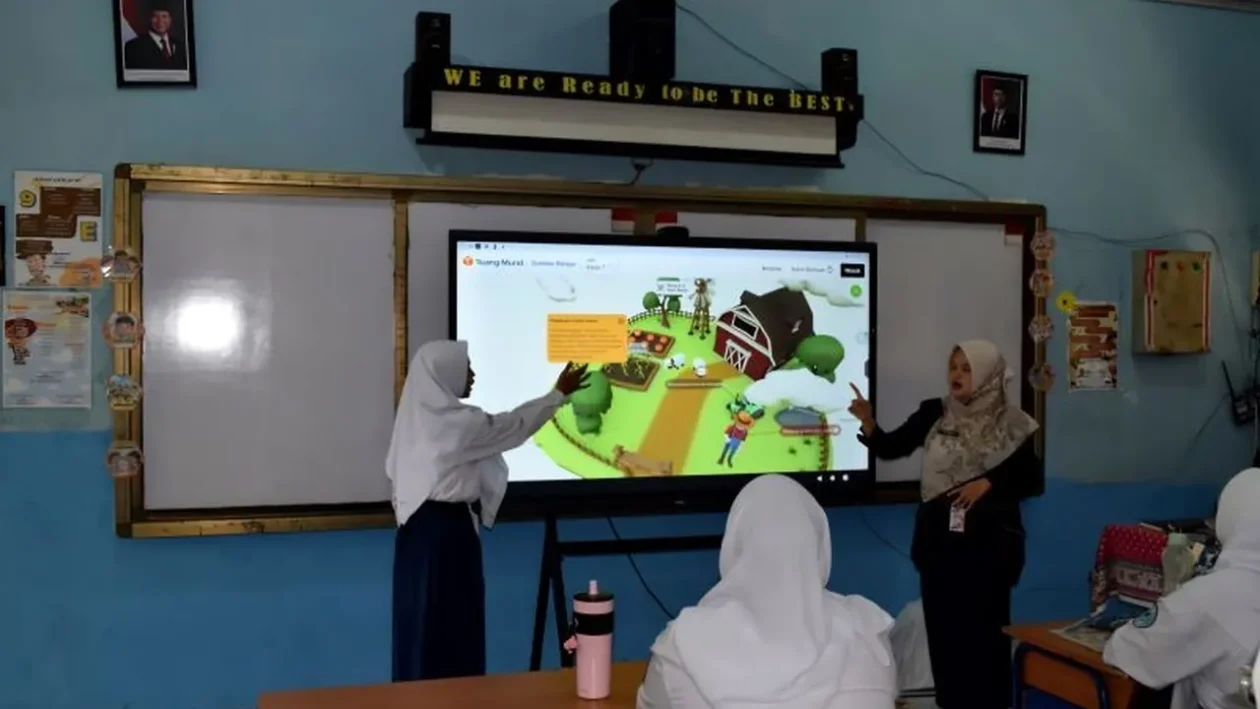
The Ministry of Basic and Secondary Education (Kemendikdasmen) is strengthening the digitalization of learning through the Sapa Sekolah program, in collaboration with the DKI Jakarta Provincial Government, in order to realize an intelligent Indonesia.
The Ministry of Basic and Secondary Education (Kemendikdasmen) is actively reinforcing the implementation of learning digitalization across Indonesia. This strategic step is being realized through the launch of an innovative program called Sapa Sekolah, a collaborative initiative with the DKI Jakarta Provincial Government.
The Sapa Sekolah program is designed as an amplification of the broader Learning Digitalization program, with the main goal of achieving the vision of an intelligent Indonesia. According to the Head of the Data and Information Technology Center (Kapusdatin) at Kemendikdasmen, Yudistira Nugraha, the initiative was launched on November 17, 2025, by President Prabowo Subianto together with Kemendikdasmen Minister Abdul Mu’ti, marking the government’s serious commitment to educational transformation.
Yudistira Nugraha explained that Sapa Sekolah focuses on developing a learning ecosystem that is deep, enjoyable, and meaningful. The program is expected to motivate teachers and students to love knowledge more deeply, and to apply what they learn in daily life, creating a more effective and inspiring learning environment.
Encouraging Deep and Joyful Learning
The Sapa Sekolah program has a crucial mission: to promote deep learning based on three main pillars—mindfulness, meaningfulness, and joyfulness. Yudistira Nugraha emphasized that through this program, teachers and students will be encouraged to support learning processes that are not only outcome-oriented, but also focused on enjoyable and meaningful learning experiences.
“This Sapa Sekolah program will encourage teachers and students to support deep learning, foster students’ love for knowledge, help them apply learning, and ultimately create a joyful classroom atmosphere. Of course, this is part of supporting deep learning—mindfulness, meaningful, and joyful,” Yudistira said in Jakarta on Thursday.
Furthermore, Sapa Sekolah also serves as a socialization activity to introduce the “Rumah Pendidikan” (Education House) more broadly to the educational community. The initiative is expected to significantly improve education quality by providing easier access to relevant learning resources, increasing the effectiveness of content delivery, and sustaining students’ learning motivation across all levels of education.
Through this approach, Kemendikdasmen aims to create a learning environment that is adaptive and responsive to technological developments. Learning digitalization becomes not only a supporting tool, but also a foundation for shaping a generation capable of critical and creative thinking.
Implementation and the Impact of Collaboration in DKI Jakarta
In implementing the Sapa Sekolah program, SMPN 28 Jakarta was selected as one of the national reference schools. Yudistira explained that this choice was deliberate, as SMPN 28 has served as a model for the Pancasila Laboratory School program, making it an ideal site for testing and developing Sapa Sekolah.
The Pancasila Laboratory School (SLP) is an innovative program applied at SMPN 28, aiming to strengthen understanding of national character values among teachers and students. This program also plays an important role in countering moral degradation that may arise in the modern era, by instilling the noble values of Pancasila.
“The Pancasila Laboratory can become part of the Education House, which will be DKI Jakarta’s contribution to Indonesia. The hope is that these contents can also be learned by other schools across Indonesia, so that DKI Jakarta, as a global city, can have an impact on schools in other regions,” Yudistira added, highlighting the program’s potential for replication.
Head of the Education Sub-Department for Region 1 of Central Jakarta, Ade Riswanto, welcomed the collaboration. He said that DKI Jakarta feels fortunate to work with Pusdatin Kemendikdasmen through the Sapa Sekolah program. Ade hopes this activity will inspire teachers to become more creative and innovative in using technology to improve learning quality in schools.
“We hope that participating teachers can pass on what they learn to colleagues who have not yet been able to join this activity, implement it, and share the knowledge gained today to improve the quality of teaching in their respective schools,” said Ade Riswanto, stressing the importance of sharing best practices among educators.