
Author: Naura Sofia Editor: Bambang MBKA
KBRN, Jakarta: Indonesian Minister of Primary and Secondary Education, Abdul Mu’ti, confirmed that the program for revitalizing educational units and expanding digital learning will remain a priority in 2026, despite facing budget constraints.
He emphasized that educational unit revitalization is part of the government’s effort to provide adequate learning facilities and infrastructure that align with contemporary developments.
“The only difference might be that the budget for 2026 is not as large as it was in 2025, which will lead to a reduction in the number of targeted schools. This may impact the implementation of revitalization in 2026,” said Minister Mu’ti during the Coordination Meeting for Regional Heads on Educational Unit Revitalization and Learning Digitalization for the 2026 Fiscal Year at ICE BSD, Tangerang Regency, Banten, on Thursday, November 13, 2025, as quoted by Antara.
Consequently, he requested that all regional heads genuinely prioritize schools with truly poor physical conditions to become beneficiaries of the Educational Unit Revitalization program. The reduced number of targeted recipient schools means the selection process will necessarily become stricter.
Therefore, he urged regional leaders to honestly and thoroughly oversee all data proposals and the condition of schools nominated for revitalization.
“The beneficiary schools must be prioritized for educational units that genuinely require assistance because their conditions are highly inadequate to support quality learning activities,” he stated.
Minister Mu’ti affirmed that his Ministry will ensure that the funds received are used accountably, efficiently, and transparently.
“We request your support for supervision and implementation, so that funds collected from the public and the State Budget (APBN) are utilized optimally. There should be no leakage or misuse,” Mu’ti stressed.
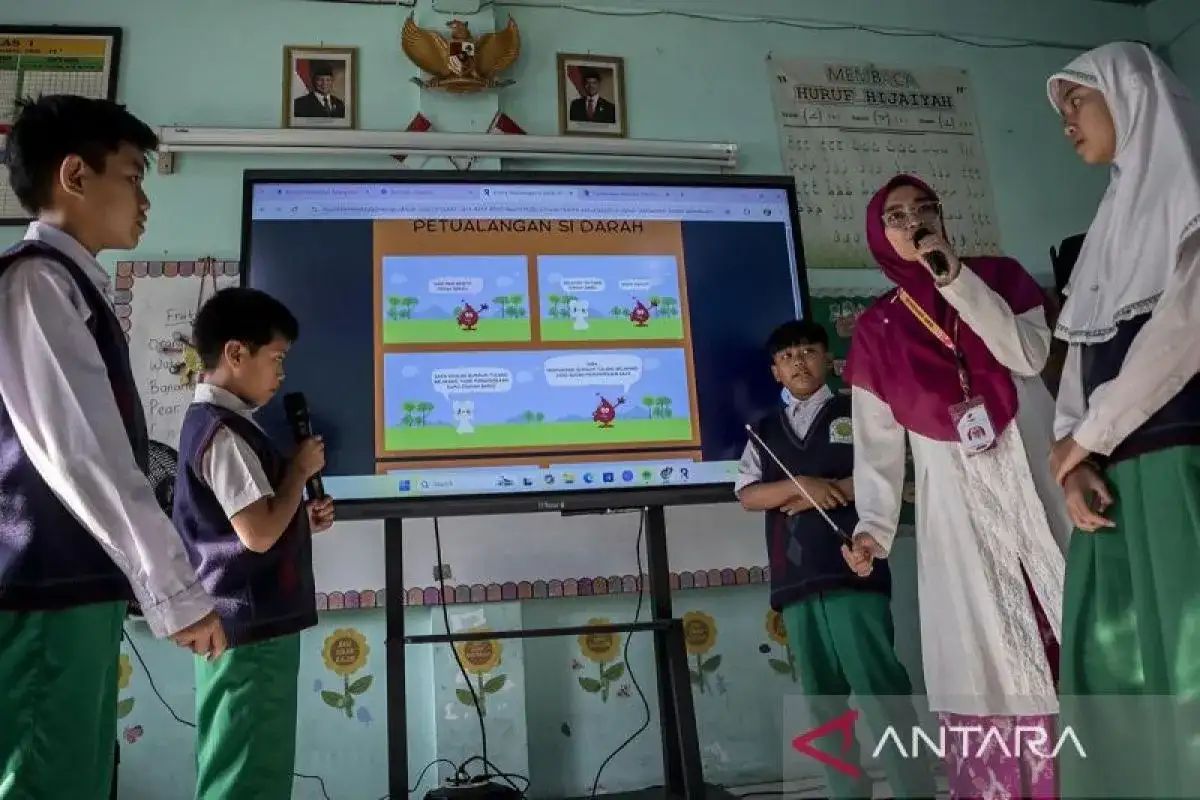
For the digitalization learning program, the Minister reported receiving a directive from President Prabowo Subianto that each educational unit should receive three Interactive Flat Panels (IFP) in 2026. This means, he continued, every school will see an increase in digital facilities to support learning next year.
“If we currently send one IFP per school, then next year, in accordance with the President’s directive, three IFPs will be sent to each educational unit,” Mu’ti said.
He added that the learning digitalization program encompasses four main components: the provision of interactive panels (IFPs), the procurement of laptops, teacher training, and the development of digital teaching materials.