
Author: Donny Kusuma Putra | Editor: Ariestia
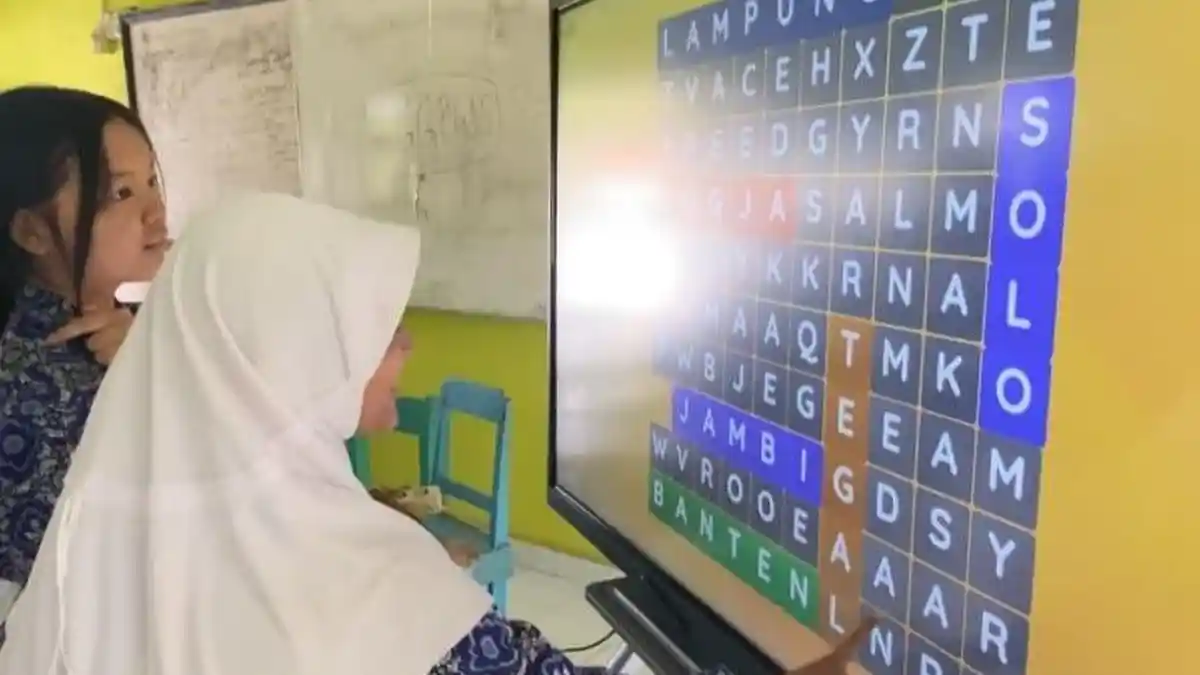
TRIBUNPEKANBARU.COM, DUMAI – The Dumai City Government, through the Department of Education and Culture (Disdikbud), has evenly distributed Interactive Flat Panels (IFP) to Early Childhood Education units (PAUD), Elementary Schools (SD), and Junior High Schools (SMP).
The Interactive Flat Panel (IFP) is an interactive touchscreen device that serves as a replacement for conventional whiteboards and projectors.
This device is used to support learning activities and presentations, making them more dynamic and participatory.
The Head of the Dumai Education and Culture Office, Muklis, revealed that approximately 96 percent of educational institutions in Dumai City—ranging from PAUD, SD, to public and private SMP—have received IFPs. He added that the IFPs received by the 206 schools were assistance from the Ministry of Basic and Secondary Education of the Republic of Indonesia.
“In Dumai, there are a total of 213 schools scheduled to receive the devices. So far, 206 schools have received them, or 96.71 percent, while 7 schools have not yet received them, or 3.29 percent, because they are still in the delivery process,” he said on Tuesday (9/12/2025).
Muklis explained that IFPs are part of the education digitalization program, which is a presidential commitment, with the goal that every school obtains this device to support the learning process.
He further explained that IFPs combine the functions of a monitor, projector, whiteboard, and computer into a single device, making it easier for teachers and making learning more interactive, creative, and engaging.
“Moreover, the presence of IFPs can create an effective and participatory digital learning experience and also allow teachers to present materials more dynamically, making students more enthusiastic,” he said.
He acknowledged that the learning digitalization program does not only involve providing devices, but also includes interactive learning content and technical guidance for teachers so they can design more creative and innovative lessons.
Muklis hopes that schools which have received IFP assistance will make good use of it to improve the quality of education in Dumai City and to make it easier for teachers to deliver materials to students digitally.
“We also hope that schools will take good care of these IFPs, as this assistance is very important for educating our children,” he concluded.